
I am engaged in consultancy and research relating to marginality, infrastructure and labour.
Click on the sections below to find out more about work I have carried out on each of the themes.
Decolonising ‘inclusion’ in international development
‘Equity and inclusion’ debates in the WASH and wider development sector have focussed on a range of concerns such as gender, disability, and reproductive health. Yet, many of these discussions have stemmed from and often led by ‘experts’ who predominantly come from the Global North, resulting in a focus on issues that are far removed from the local context. I am currently collaborating with colleagues from India, the UK, and the Rural Water Supply Network to explore how inclusion can be decolonised and reframed.
Experiences of marginalised communities in Lahore, Pakistan
In Pakistan, sanitation workers and their wider communities are marginalised by their occupation, and often come from religious minority backgrounds including Hinduism and Christianity. I conducted some data analysis using NVivo software on data gathered with sanitation worker communities in Lahore for the Center for Law and Justice.
Gender and social inclusion in energy access programming
Leaving no one behind in efforts to attain Sustainable Development Goal 7 to ensure access to clean energy for all requires programmes to be inclusive throughout their activities. In collaboration with Dr Magi Matinga, an advisor at Energia, I reviewed the design of the Innovate UK Energy Catalyst programme to ensure it can address aspects of diversity beyond gender alone. This project involved a gender equality and social inclusion analysis of existing documents from the project and consultations with key stakeholders to produce a report.
Understanding the experiences of disability NGOs in adapting to the COVID-19 pandemic
I worked with the International Disability and Development Consortium to produce a report, ‘Adjust and Respond: the experience of organisations working with people with disabilities in adapting to the COVID-19 pandemic’. This report was based on findings from a survey about their member organisations’ experiences of adapting to the ongoing COVID-19 pandemic and responding to the challenges it brought. This project was conducted as part of the UN Partnership on the Rights of Persons with Disabilities initiative and fed into work by UN entities. You can read a blog about the process of developing the questions for the survey and the lessons learned from this experience here. The report was launched at the United Nations Conference of State Parties at a side event in June 2021.
Uncovering WASH realities through PhotoVoice
PhotoVoice (participatory photography) is a technique in which people are given cameras to identify, represent and enhance their communities by taking photographs. It is particularly useful for exploring hidden and taboo topics and can enable people to convey the issues they experience everyday to decision makers. In recent years, this method has been increasingly used in the WASH sector.
I published a Learning Paper with the Sanitation Learning Hub at the Institute of Development Studies in the UK, to provide lessons learned on using PhotoVoice to explore taboo and hidden WASH topics. I conducted online interviews and literature searches to understand how PhotoVoice has been used to understand different topics in WASH, to provide information about what PhotoVoice is and how it can be useful for the WASH sector. I run an online course on using PhotoVoice for the WASH sector which can be booked for organisations, as well as on certain dates for individual attendees. For more information, contact me.
Climate resilient inclusive urban sanitation
As the world rapidly urbanises, unsafe urban development practices are leaving vulnerable communities exposed to climate hazards, poverty, and poor access to sanitation. Whilst there is a lively discussion surrounding ‘climate resilient inclusive WASH’, there remains little clarity on what this means in practice. I am working in collaboration with Mark Fletcher at Arup and Paula Morcillo de Amuedo at C40 Cities to produce a publication which critically interrogates what ‘climate resilient inclusive sanitation’ means in the context of urban spaces. The publication will be released in summer 2026.
Access to energy for people with disabilities in Ahmedabad, India
In India, initiatives like the Pradhan Mantri Ujjwala Yojana (PMUY) and Saubhagya Scheme have significantly expanded household access to LPG and electricity, respectively. Yet, little empirical evidence exists regarding how people with disabilities experience or are excluded from these advances. Between 2024-2026 I led a two-phase field research project with Prabhat Education Foundation for the Modern Energy Cooking Services (MECS) Programme. Phase I explored the experiences of people with different disabilities in accessing and using energy in Ahmedabad, India, and provided evidence-based recommendations to meet their energy needs through inclusive policy and practice, using creative participatory methodologies including PhotoVoice and drawing with people with disabilities. The full research report can be read here. Phase II of this project was completed in 2026, and explored how people with disabilities can be included in the transition to eCooking.
Water supply in shared sanitation facilities for menstrual health in urban India
India’s expansion of access to sanitation has been marked by the Government’s flagship Swachh Bharat Mission, yet many of the urban shared public and community toilets across the country lack access to water supply. I worked with Aasim Mansuri, Jigisha Jaiswal (Center for Water and Sanitation, CEPT University) and Prof. Mona Iyer (Faculty of Planning, CEPT University) to publish a paper which highlights access to water for menstrual health in community and public toilets in urban India. The paper can be read in the Journal of Water, Sanitation and Hygiene for Development here.
Integrating the needs of perimenopausal women into WASH programming
Urban infrastructure needs to meet the needs of an increasingly ageing population, including the majority of women going through the perimenopause. I worked with the Sanitation Learning Hub at the Institute of Development Studies to produce a practical learning paper on how the needs of perimenopausal women can be integrated into WASH programmes, which can be accessed here.
Water heritage in India
In early 2023, I conducted some formative fieldwork to explore the challenges of sustaining water heritage in the Ahmedabad area of India. As part of this work I visited Adalaj Stepwell to inform two blogs for the Rural Water Supply Network about what we can learn from past relationships between rural communities and ancient water points and explored what lies ahead for India’s stepwells in the future. I also conducted a visit to Sarkhej Roza in Ahmedabad to look at the threats of urbanisation in India for water heritage sites. I am keen to expand this area of work in future.
Experiences of women sanitation workers in Odisha, India
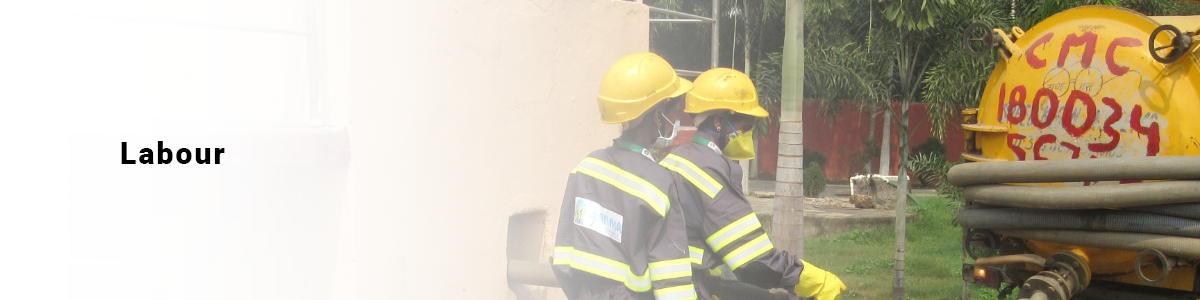
Women comprise half of the sanitation workforce in India, yet their experiences remain all too often hidden by their gender, caste and occupation. In 2025, I led a field research project in Bhubaneswar and Cuttack with the Urban Management Centre in Ahmedabad and Prof. Sarah Jewitt at the University of Nottingham, which explored the experiences of women working as toilet cleaners and septic tank cleaners at work, in terms of factors such as access to personal protective equipment, work patterns and wages, as well as their access to housing, healthcare and family life. I presented a poster about this research at the Global South Academic Conclave 2026 at CEPT University, Ahmedabad, which is available here. A journal paper about the study is under review.
Marginality in faecal sludge management in Nepal
Adequate faecal sludge management for off-grid sanitation in rapidly urbanising areas is dependent on a largely ‘hidden’ workforce, sanitation workers, whose lives are shaped by marginality and intersectionality, through gender, age and, in South Asia, caste. I supported the Towards Brown Gold project, led by Prof. Lyla Mehta at the Institute of Development Studies, to explore and identify how the project can apply an intersectional lens to understand the lives of sanitation workers directly involved in the management of faeces. I supported their research in Nepal to ensure that marginality is adequately considered when researching sanitation work, including supporting reflexivity workshops. I reviewed initial findings from the field, and published a blog on the relevance of equality, inclusion and marginality for sanitation workers. This blog featured as part of the Institute of Development Studies’ ‘Spotlight’ bulletin and on the university homepage in May 2022.
Intersectionality in sanitation work
In collaboration with Dr. Sally Cawood (Lancaster University), Dr. Mariam Zaqout (UCL) and Prof. Barbara Evans, I published a journal paper on the need for equity and inclusion debates in the WASH sector to engage further with the rights of sanitation workers. I published a blog with Sally in March 2021 which explores the role of artificial intelligence in eliminating manual scavenging in India and Bangladesh for FemLab.co.
Sanitation Workers’ Forum 2021
I was on the organising committee for the first Sanitation Workers Forum in November 2021. The organising committee consisted of volunteer MSc, PhD students, researchers and professionals based in the UK, USA and India working on and passionate about the topic of sanitation labour. Organisational partners include the Initiative for Sanitation Workers, a collaborative partnership for global advocacy on sanitation workers between ILO, WaterAid, WHO, World Bank and SNV. I contributed to the ‘In conversation with…’ video series discussing the importance of intersectionality in sanitation labour rights, which is available to watch on Youtube.