
By Amita Bhakta
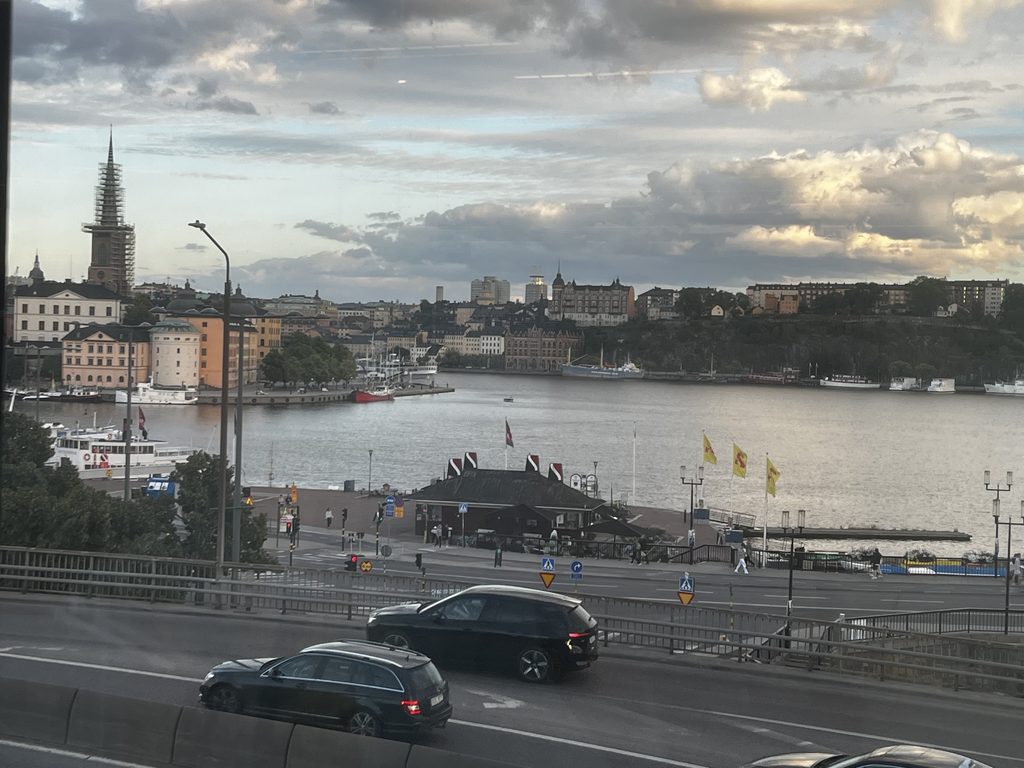
Stockholm, Sweden (Photo: Amita Bhakta)
I was very fortunate to be able to travel to Stockholm in August for this year’s World Water Week 2026. This year’s theme on Water for People and Progress really resonated with me, having done a fair amount of work on climate resilience and inclusion recently. In this blog post, I take stock and reflect on my highlights of the week.
Bridging expertise: Advancing inclusive and climate resilient WASH systems
The main highlight of the week was to be involved in organising and presenting in a session on climate resilient inclusive WASH, hosted alongside Paula Morcillo de Amuedo (C40 Cities) and Dr. Mark Fletcher (Arup). In our session, Paula and I presented parts of our brand-new paper we have published with Mark, Enhancing inclusion in climate resilient urban sanitation services. Through our presentation, we reflected on the ‘triple burden’ of urban poverty, climate hazards and poor sanitation that is leaving people exposed to the challenges of accessing climate resilient sanitation services. By identifying current gaps for inclusion in climate resilient water supply and sanitation in terms of designing infrastructure for different physical abilities, planning for diverse user needs, creating inclusive service delivery for sanitation workers and challenges of being able to afford climate-resilient WASH systems, we also found opportunities for climate resilient inclusive WASH. These opportunities include focusing on the most marginalised communities to drive universal access to and context specific solutions, which may include container-based sanitation, as well as designing these solutions for all, creating new sanitation markets and professionalising sanitation services.
We then had excellent presentations from Aasim Mansuri, Center Head- Strategy, at the Center for Water and Sanitation (CWAS) at CEPT University, Ahmedabad, and Dr. Martin Gambrill, independent consultant. Aasim’s presentation drew on experiences from Maharashtra on how we can move towards inclusive climate resilient WASH services. His reflections taught us how energy transitions, nature-based solutions and inclusive services are the critical factors to achieving this goal. Solar-powered faecal sludge, water and sewage treatment plants, public-private partnership tenders for solar power at water and sanitation infrastructure facilities, and the engagement of women’s self-help groups to maintain urban forests acting as carbon sinks alongside the upkeep of menstrual hygiene management facilities in community and public toilets, are key components of climate resilient inclusive WASH. Martin then took the audience to Brazil, through his reflections on the ‘condominial’ experience in delivering citywide inclusive sanitation. Reminding the audience of the challenges of water supply and rapid, unplanned urbanisation facing many cities, he outlined how the condominial approach seeks to provide one tailored sewerage system for all residents, which is of the same qualities as conventional sewerage systems with lower costs and higher connection rates. Martin noted the importance of residents participating in this model, having a voice in decision making and agreeing roles and responsibilities up front before this is implemented. His presentation emphasised the need to consider a range of elements, including how to connect utilities and communities, integrating sanitation systems into urban environments and the importance of decentralised systems in ensuring everyone can continue to have access to sanitation in a changing climate. Our panel discussion brought together these reflections from Aasim and Martin, Paula and myself, with lessons from Fausto Alarcon from the City of Quito. Fausto gave his excellent insights into climate resilience and inclusion from a water utility perspective, bringing our thoughts towards how we can scale up potential solutions. Finally, our session ended with the launch of the new Climate Resilient Inclusive WASH Hub, creating a space for sector professionals to share their lessons. Our session demonstrated how ensuring inclusion in climate resilient services is key to providing water for people and progress.
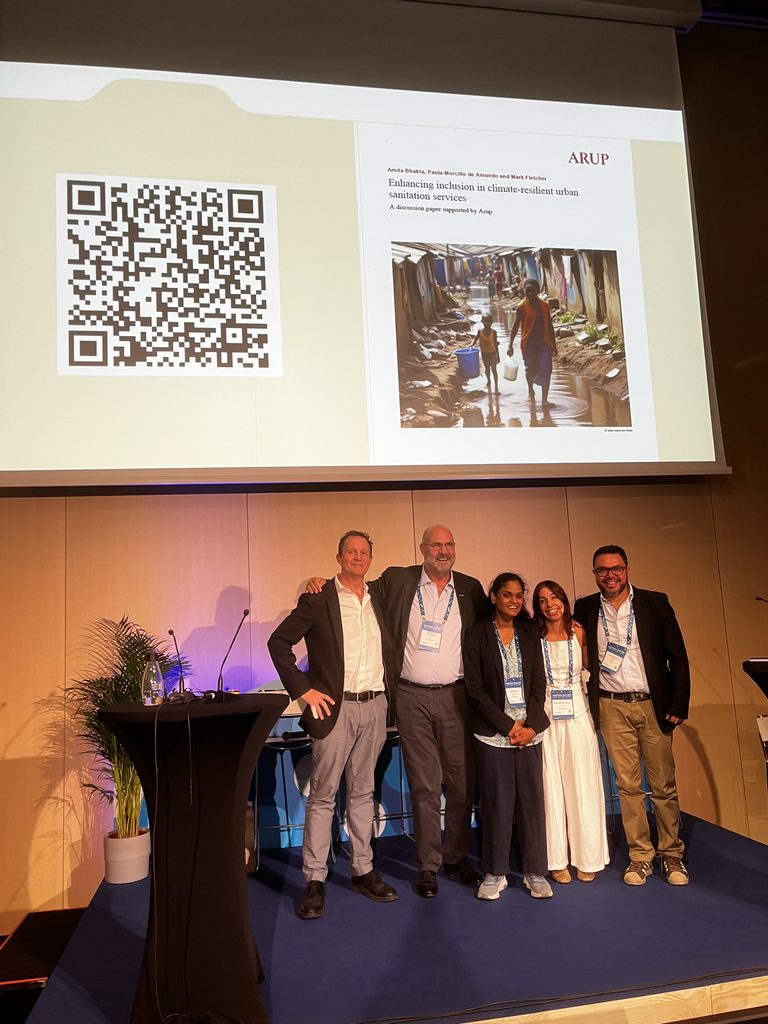
Panellists and presenters from our session (L-R: Martin Gambrill, Mark Fletcher, Amita Bhakta, Paula Morcillo de Amuedo and Fausto Alarcon. Photo: Arup)
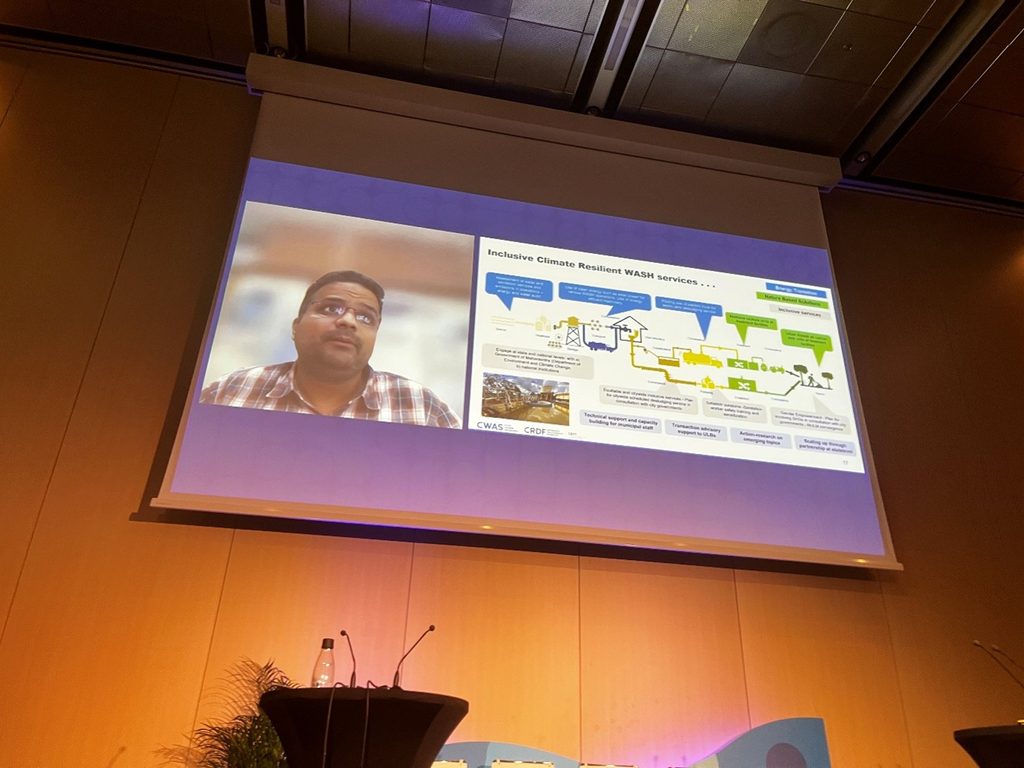
Aasim Mansuri, CWAS, CDRF, CEPT University presents at the session on climate resilient inclusive WASH (Photo: Amita Bhakta)
A close encounter with the ‘sharks’ of the water, sanitation and hygiene sector
It was a great pleasure to join Esther Shaylor (UNICEF) and colleagues for a session on WASH innovations. Through an adapted version of the game show ‘Shark Tank’ in which innovators pitch their ideas and inventions to entrepreneurs, or ‘sharks’ (all actors, it’s a game!), the session took attendees to the mythical city of Lodah, which faced a wide range of infrastructural and social challenges, to assess whether the proposed inventions could address the challenges faced by Lodah’s citizens. We heard four excellent pitches, including by a ‘company’ called ‘DrinkWell’, a WASH insecurity analysis working on data with at least one university, UNICEF and a proposition to conduct groundwater analysis in Lodah, and a pitch for decentralised wastewater treatment for peri-urban Lodah. The sharks, including a representative from the private sector, a minister from the Government of Lodah, an investor from the Bank of Infinite Possibilities and someone from UNESCO working with Ai, then asked the entrepreneurs questions to help them to decide which solution to invest in. As session attendees, we in the audience were also able to judge the proposals, and invest in them ourselves with our giant money notes given to us at the start of the session. What really struck me from the session is the importance of innovation. To ensure we can provide water for people and progress, there is a need to be able to invest in innovations at scale, by looking at financing, regulation, and the role of the banks and private sector.
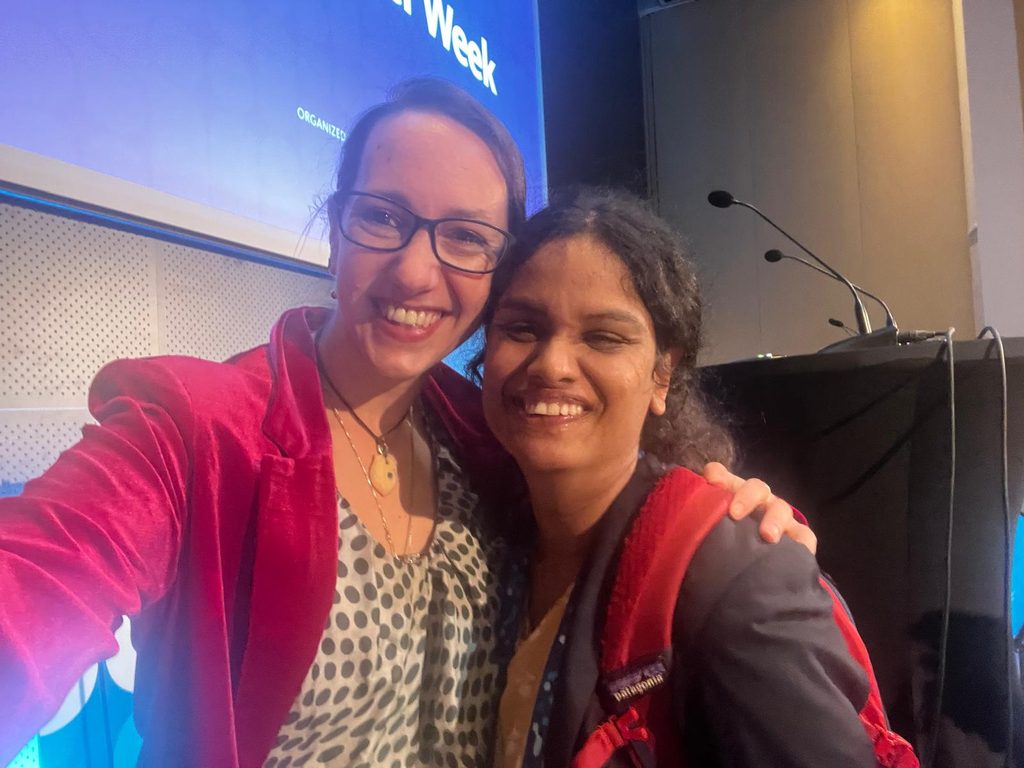
Esther Shaylor, UNICEF, with Amita Bhakta (Selfie: Esther Shaylor)
A spotlight on the transformative impact of paying attention to laundry
The theme of innovative solutions for people and progress also came through in a session about laundry transformations. The importance of laundry solutions was made clear when we were reminded about the fact that 4 billion people still wash their clothes by hand, and that the washing machines which are more widely available in high-income countries often don’t fit low-income country contexts. GOPA highlighted how their study across India, Bangladesh, Indonesia and Mozambique brought to light the daily challenges that washing clothes brings. With the burden of laundry overwhelmingly on the shoulders of women, they face the challenges of using multiple water sources shaped by cost, quality and convenience, water scarcity, physical strain and the flow of wastewater into the open drains of India and the soak pits of Mozambique. Practica reiterated the key priority of access to water and human centred design, as in many parts of the world, water still needs to be collected. The Washing Machine Project demonstrated how the scale up of their hand-operated Divya machine to 15 countries has paved the way for income generation for low-income families through laundry businesses. Scaling up access to laundry will involve a combination of actions, among them: innovative solutions and programming need to attract financing, laundry needs to be integrated into guidance such as those by SPHERE and citizen science is key to getting data on the issue of laundry. These can only be achieved if the enabling environment through policy and cross-ministry collaboration across different countries is present, to give laundry as much attention as other water, sanitation and hygiene challenges.
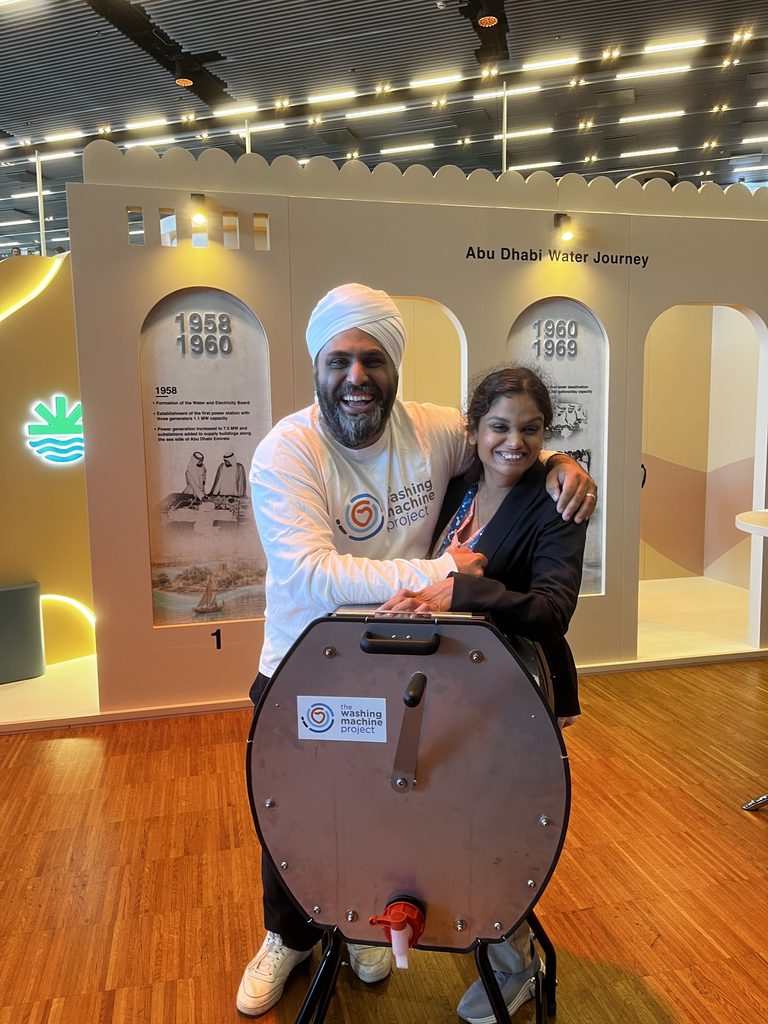
Navjot Sawhney (The Washing Machine Project) with Amita Bhakta, and the Divya washing machine (Photo: Amita Bhakta)
Designing water-sensitive cities by integrating sponginess, sanitation and climate resilience
As an urban planner and geographer, SNV’s session on water-sensitive cities was of particular interest to me. The session brought to life the six steps needed to create water-sensitive cities: water supply, public health, flood prevention, social amenities and environmental protection, limits on natural resources, and resilience to climate change. With climate change bringing the breadth of uncertainty when it comes to water, from flooding to drought, the session highlighted the need for cities to be water sensitive rather than to manage water, by viewing water as a system, as a part of urban resilience and as an asset. It was insightful to hear about GIZ’s work to enable urban planning solutions to integrate nature-based solutions (NbS). In the cities of Iloilo and Capiz in the Philippines, managing water is key to the growth of the economy. Managing the city’s water systems through planning with nature, connecting plans with water landscapes and embedding nature into local policies and action plans can ensure that Iloilo’s economy thrives. On the coast in Capiz, natural ecosystems not only provide storm and flood protection, but together with NbS supports livelihoods and economic development.
Economic regulation in scaling urban sanitation services
This session led by my colleagues, Professor Barbara Evans and Dr Claire Grisaffi from the University of Leeds was particularly insightful. In the context of scaling up access to urban sanitation, regulation needs to be enabling and facilitating the balance of economic, environmental and public health objectives. Through the session, it was clear that economic regulation creates an enabling environment for scaling up services. Rules for entering the sanitation market and the professionalisation of decentralized solutions are key. Through the presenters’ reflections on problems being faced and the potential solutions to them, the pivotal role of costing resilience was clear. The CACTUS project at Leeds has identified robust cost structures for whole life costing for sanitation, but there are critical gaps. Sanitation costs are all too often bundled together with water. With no consistent costing approach across the sector, taxes, capacity development and sanitation workers’ safety is often not costed properly. A standard approach for costing resilience is needed, and tariffs need to be complemented with funding for good quality sanitation services. Through an activity where we looked at whether certain key messages resonate, views from different geographies emerged. The view from South Africa was that users cannot bear the full costs of sanitation, whilst in India, political will was the key to scaling up. At the same time, there were also hints of the role of behaviour change, learning from the Day Zero case in Cape Town, where people altered their flushing patterns in the face of water shortages.
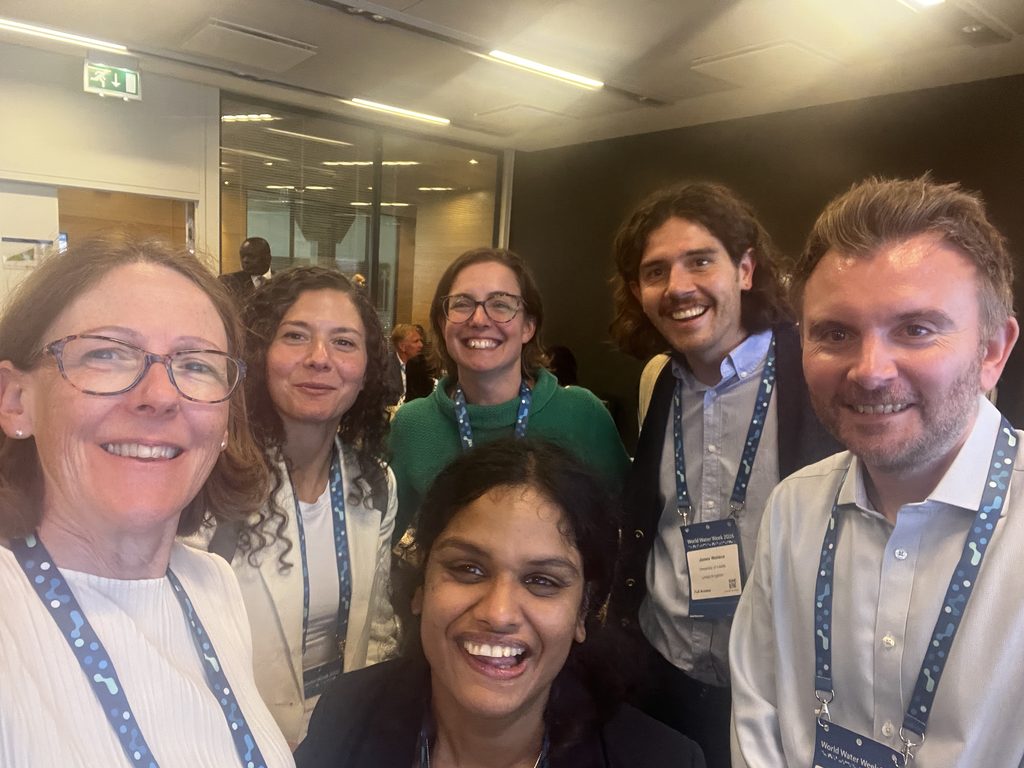
L-R: Barbara Evans, Goufrane Mansour, Claire Grisaffi, Amita Bhakta, James Wallace and Sam Drabble (Selfie: Barbara Evans)
Final thoughts
The theme of ‘water for people and progress’ is not just about the flow of this natural resource we need to survive. It is also about how we sustain the infrastructure to work with nature and keep bringing it to us, how we pay for it equitably, and how we sustain the resource itself in a changing climate. My time in Stockholm reaffirmed to me not only the importance of innovation, but also the critical role that mechanisms such as local adaptation, financing, integration into local environments, decentralisation, and the role that we as people will play in the future of water and sanitation globally.
Acknowledgements
This fantastic week would not have been as amazing as it was without the support of many people, and I want to thank: Mark Fletcher, Paula Morcillo de Amuedo, Fausto Alarcon, Martin Gambrill, Aasim Mansuri, Catherine Buckley, Ciara Gyde, Ellie McBurney, Claudia Nielson, Kirsten Smith, Ruby Novello, Spurthi Kolipaka, James Wallace, Claire Grisaffi, Esther Shaylor, and Barbara Evans, among many others.
Comments are closed