
By Nguzo Ogbodo | Founder and Executive Director, Hope and Dreams Initiative (HDI)
A girl should never have to choose between her dignity and her education. Yet for girls in underserved Nigerian communities, access to a safe, private toilet can influence whether they attend school, manage menstruation confidently, or feel secure during the school day.
As we mark World Toilet Day 2026 under the theme “Safe toilets. Equal futures,” we must recognize that sanitation is more than infrastructure. It is a question of gender equality, health, climate resilience, and human rights.
Through Hope and Dreams Initiative, a women-led organization established in Nigeria in 2011, I have seen why conversations about empowering girls must include water, sanitation and hygiene (WASH). Our work in communities including Aleyita, Chika and Piwoyi in Abuja brings these connections into focus. Learn more at www.hope-dreams.org.
Amina’s Lesson: Dignity Begins with Knowledge
During one of HDI’s menstrual health education programmes, a student I will call Amina shared what she had learned. She told us that, because of the programme, she now knows how to wear her sanitary pad properly and understands the importance of washing her hands after changing it.
Her words stayed with me. What might appear to be a small lesson represents greater confidence, practical knowledge, and the ability to care for herself during menstruation. Amina’s experience reminds us that menstrual dignity is not achieved by distributing sanitary pads alone. Girls also need accurate information, privacy, water, soap, and a safe place to change and dispose of menstrual materials.
Education is essential, but it becomes difficult to practise good hygiene when school toilets lack water, doors do not provide privacy, or handwashing facilities are missing. A girl should not have to feel embarrassed, unsafe, or excluded because her school cannot meet these basic needs.
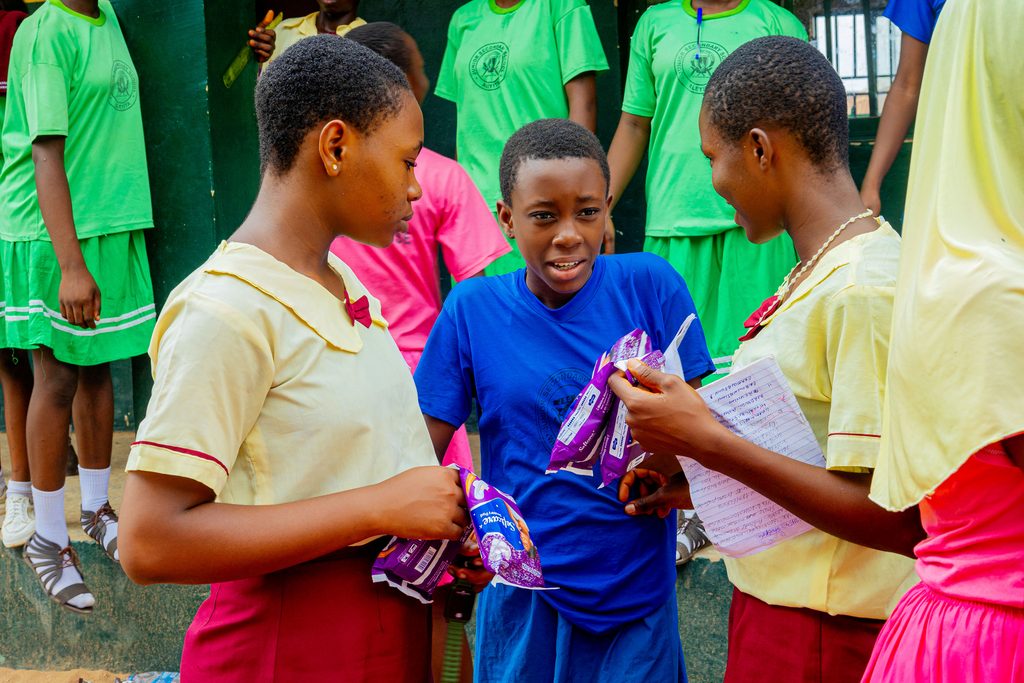
Students engage with menstrual hygiene materials during a school activity. HDI’s education programmes help girls build practical knowledge and confidence. Photo: Hope and Dreams Initiative (HDI).
Climate Change Makes an Unequal Situation Worse
In the communities where HDI works, including Aleyita, Chika and Piwoyi in Abuja, flooding has occurred, particularly where inadequate drainage prevents rainwater from flowing away safely. These experiences show that climate resilience is not an abstract concern for underserved communities.
During heavy rainfall, floodwater can make routes to homes, schools, and sanitation facilities difficult to navigate. Where sanitation infrastructure is inadequate, flooding can also contaminate water sources and increase health risks. Such disruptions can make daily hygiene more difficult, especially for people who already face barriers to safe sanitation.
For adolescent girls, the implications are especially important. A girl like Amina may understand how to change her sanitary pad properly and why she should wash her hands afterwards, but she also needs reliable water, a private toilet, and a safe place to dispose of used materials. Flooding can put those essentials further out of reach.
Our experience underscores why climate-resilient sanitation must address environmental risks alongside existing inequalities. Better drainage, dependable water supplies, accessible toilets, and community participation are essential to keeping facilities safe and functional during extreme weather. For HDI, protecting girls’ dignity also means protecting the conditions that allow them to practise what they learn.
Our Community WASH Library and Safe Space
At HDI, our Community WASH Library and Safe Space in Aleyita brings sanitation and hygiene work together with literacy, menstrual health education, mentorship, and psychosocial support. Our community initiatives include a borehole, hand washing facilities and sanitation improvements, alongside opportunities for girls to learn, ask questions and build confidence.
We also work with boys, parents, teachers, traditional and religious leaders, and other community stakeholders. Menstrual stigma and sanitation inequality cannot be addressed by asking girls to solve these problems alone. Schools, families, local authorities and communities all have responsibilities.
The safe space reflects an important lesson from our work: infrastructure and education must reinforce each other. Providing a facility is only one step. People must be able to use it safely, maintain it and influence decisions about the services they need.
From Grassroots Experience to Better Policy
Four priorities deserve attention. First, school sanitation planning must treat menstrual health as essential, not optional. Second, climate risks such as flooding, water scarcity and safe waste management must be considered from the outset. Third, toilets and hand-washing facilities must be accessible to people with disabilities and other users with differing needs. Finally, women and girls must have a meaningful voice in designing, monitoring, and improving sanitation services.
Government investment, community leadership, and long-term maintenance are all necessary. Counting newly constructed toilets is not enough; we must ask whether they remain safe, clean, accessible, and usable throughout the year.
Safe Toilets, Equal Futures
Amina’s story is a reminder that change begins with listening. She learned how to use a pad and why hand washing matters. Our responsibility is to ensure that girls like her have the water, soap, privacy, and sanitation facilities needed to put that knowledge into practice.
On World Toilet Day, let us move beyond treating toilets as isolated structures. Safe sanitation supports education, health, confidence and equal opportunity. Climate-resilient, inclusive systems can protect these gains even as environmental pressures grow.
Every girl deserves more than a toilet. She deserves dignity, safety and a future in which her rights are respected.
About the author: Nguzo Ogbodo is Founder and Executive Director of Hope and Dreams Initiative (HDI), a women-led Nigerian civil society organization established in 2011. Her work advances girls’ education, menstrual dignity, gender equality and community-led WASH initiatives. www.hope-dreams.org
Comments are closed